
Blue River Is Rewriting Its Short-Term Rental Rules
The Short Version
Blue River's Board of Trustees is rewriting the town's short-term rental program from the ground up. The proposed framework would end Blue River's run as the last uncapped STR market near Breckenridge. It adds zone-by-zone license caps, a lottery for new licenses, and stiffer enforcement, with the first phase targeted for January 1, 2027.
Nothing is final yet. As of mid-October, the trustees had not set the cap percentage or adopted a replacement ordinance. The emergency moratorium on new licenses and renewals remains in effect through at least December 31, 2026.
Where Things Stand Today
In November 2025, the trustees adopted an overhauled STR ordinance that took effect in 2026. It limits how many licenses one owner can hold, regulates parking and outdoor fires, and requires a 24/7 responsible agent who responds to complaints within 60 minutes. Key current requirements:
- License fee: $300 base plus $300 per bedroom. A four-bedroom home pays $1,500 a year.
- Listings: Every Airbnb or VRBO listing must show the town license number, the occupancy limit, and the number of parking spaces, capped at five.
- Fires: No outdoor wood-burning fires. Only gas appliances with an automatic shut-off timer are allowed.
- Taxes: The town's 3.4% lodging tax is not remitted by the platforms. Owners must file and pay it directly.
- One owner, one license: Starting in 2027, no one may hold an interest in more than one Blue River STR license.
- Licenses don't transfer: Licenses expire December 31 each year, and a buyer cannot take over the seller's license.
In April 2026, the town sent owners a reminder citing "significant noncompliance." On May 19, the board voted 6-0 to adopt an emergency moratorium (Ordinance 2026-03). It freezes new licenses and renewals of lapsed licenses through December 31, 2026. At the time, the town counted about 210 licensed STRs but roughly 230 operating within town limits.
The moratorium has been contentious. In June, one trustee who voted for it called it a "knee-jerk reaction." The board declined to repeal it but agreed to accelerate the rewrite and approved new compliance-tracking software.
What the Trustees Are Proposing
Through summer work sessions ending August 25, the board reached consensus on a two-phase framework. Work-session consensus is direction to staff, not law.
| Phase | Target date | What it covers |
|---|---|---|
| Phase 1 | January 1, 2027 | Six licensing zones, a percentage cap in each, grandfathering, and allocation of new licenses |
| Phase 2 | January 1, 2028 | Occupancy limits, minimum stay, and annual rental-night limits |
Zone caps. The town would be divided into six zones. Each zone could license STRs up to a set percentage of its buildable lots, not its built homes, so vacant land counts toward the base. Town figures from August 12 show 208 licensed STRs on 842 buildable lots, or 24.7%. The cap percentage is the one number not yet decided.
Grandfathering. Board consensus supports carrying existing licenses into the 2027 renewal window, but only if all renewal paperwork and operating requirements are met. Whether those licenses survive beyond 2027 in an over-cap zone has not been decided.
Lottery, then waitlist. New licenses would be awarded by an initial lottery rather than first come, first served, followed by a waitlist.
Enforcement. The board favors escalating violation classes, suspension for significant violations, revocation for severe ones, and hearing officers for appeals.
Occupancy and stays (Phase 2). Early direction is two guests per legal bedroom, eliminating the current two-plus-two allowance, and a three-night minimum stay. These are the least settled pieces.
Timeline and How to Weigh In
- May 19, 2026: Emergency moratorium adopted.
- August 12 and 25: Work sessions produce the zone-and-cap framework.
- September 15: Trustees go into executive session for legal advice on STR license term and expiration.
- September 22: Special meeting on STR policy and enforcement, with the cap percentage on the agenda.
- Mid-October: The town's rules page still showed no cap adopted.
- December 31: The moratorium is set to expire unless lifted sooner or extended.
To take effect, the new rules must pass as an ordinance on first and second reading, and the second reading includes a public hearing. That hearing is the formal opportunity for owners to comment. Meetings are held at Town Hall, 110 Whispering Pines Circle, with a Zoom option. Check the town's agenda page for upcoming dates.
What It Means for Owners and Buyers
Current license holders: Your license is now your most valuable and most fragile asset. Grandfathering is conditional on compliance. Keep renewal paperwork, lodging-tax filings, your responsible agent, and occupancy and parking limits in order. The open questions that will set a license's value are whether it survives past 2027 in an over-cap zone and whether the town shrinks over-cap zones by attrition.
Buyers: No new Blue River STR license is available today, and a seller's license does not convey at closing. If STR income is essential from day one, Blue River doesn't work right now. Rentals of 30 days or more need no STR license and remain allowed.
Confirm jurisdiction first. Many homes with a Breckenridge mailing address or a "Blue River" label sit in unincorporated Summit County, which has its own basin caps. Check the Summit County GIS jurisdiction field before applying any of these rules or visit our proprietary STR search tool.
I'll report the cap percentage and the ordinance language as soon as they're adopted. If you own or are considering property in Blue River, reach out and we can talk through your specific situation.
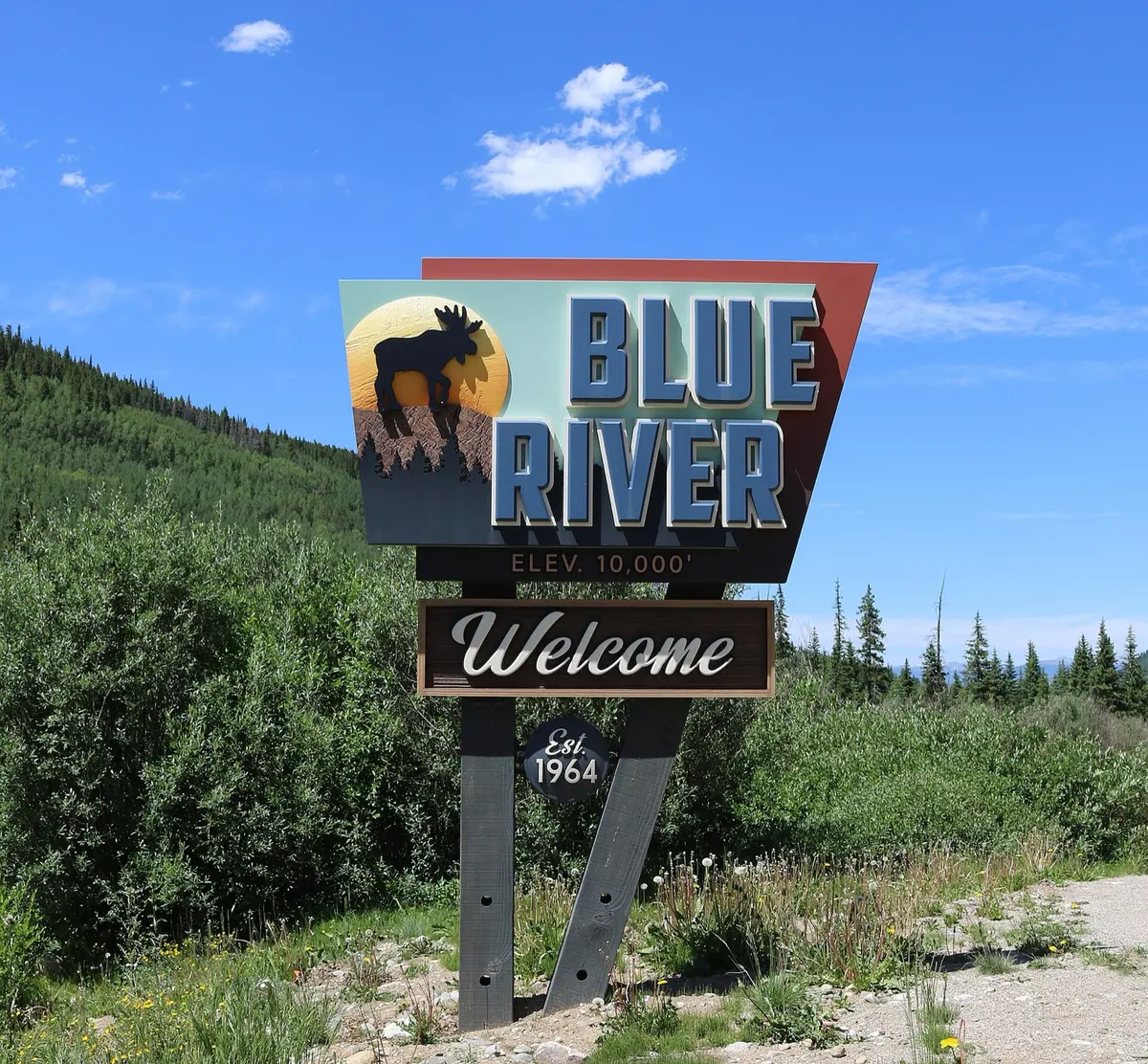
Photo: Blue River welcome sign by Jeffrey Beall, CC BY 4.0, resized.